Article
Most pages answering “is Serbia safe for expats” answer it in the first sentence, with a yes, and then spend 1,500 words being reassuring. That is not much use to someone about to move a family, a pension, or a career here. What is useful is knowing what the official sources actually say, what they qualify, and which risks are real enough to change how you behave.
What the official sources actually say
The United States Department of State places Serbia at Level 2: Exercise Increased Caution. That is the second of four tiers, and it is the same tier applied to a number of Western European countries nobody thinks twice about visiting. It is not a warning against going. It is an instruction to pay normal attention.
For the detailed version, the State Department’s Overseas Security Advisory Council publishes a country security report for Serbia. It is the single most useful document a prospective resident can read on this topic, and it is free. It is also written for security professionals rather than for marketing, which is exactly why it is worth your time over any relocation company’s summary, including this one.
We are not going to publish a crime-rate percentage or an index score here. The numbers circulating on relocation sites are usually uncited, frequently years out of date, and often lifted from crowdsourced surveys presented as though they were statistics. Read the primary sources instead.
The Kosovo border caveat, practically
The travel advisory for Serbia carries a caveat about the administrative crossings between central Serbia and Kosovo. This is the part most competitor pages either skip or bury, so here it is plainly, without any commentary on the underlying politics.
For a resident living in Belgrade, Novi Sad, Nis, or anywhere in central or northern Serbia, this caveat has essentially no bearing on daily life. It is a border-area note, not a country-wide one.
It becomes relevant in one specific situation: if you plan to travel across that boundary. Entry and exit rules there differ from an ordinary international border, and the sequence of stamps in your passport can create genuine complications for a later re-entry into Serbia. If a trip in that direction is on your list, that is a question to ask before you go rather than after. Route planning matters more there than anywhere else in the country.
Is Belgrade safe at night?
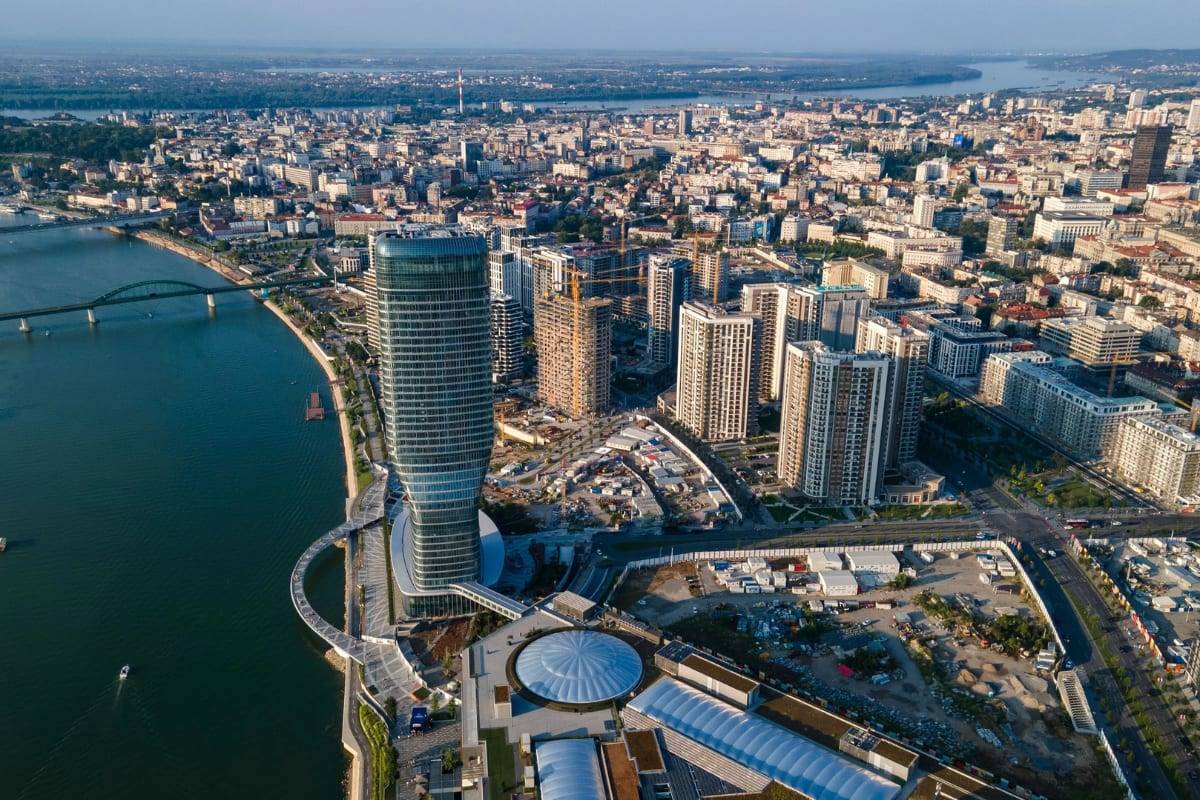
Belgrade is a late city. Restaurants fill after nine, and central districts stay populated well past midnight, which by itself does more for street safety than any policing statistic. Residents in Vracar, Dorcol, and Stari Grad generally walk home at night without giving it much thought.
That is not the same as saying nothing happens. The commonly reported problems in nightlife areas are the ones you would expect in any European capital with a strong bar culture: pickpocketing in dense crowds, phones taken from tables, disputes over invented taxi fares outside clubs, and the occasional bar bill that bears no relationship to what was ordered.
Two habits handle most of this. Use a ride-hailing app or a taxi ordered by phone rather than one idling outside a nightlife strip. And in a bar you do not know, ask what things cost before ordering rather than after.
Which district you live in changes the texture of this more than it changes the risk level. Our Belgrade neighbourhoods ranked post covers where the noise and the crowds actually are, which for most people is the more practical question.
What actually gets stolen
Petty theft is the most commonly reported issue affecting foreigners in Serbia, and it concentrates in exactly the places you would predict: crowded public transport, busy pedestrian streets in the centre, markets, bus and train stations, and outdoor cafe terraces in summer.
The specific pattern worth knowing is the cafe-table phone. Belgrade’s cafe culture means people sit outdoors for hours with a phone face-up on the table beside them. That is the single easiest thing to lose in this city, and residents lose them as often as tourists do.
The scam categories that come up repeatedly:
- Unmetered or “broken meter” taxis, particularly from the airport and outside nightlife venues.
- Street currency exchange, which is both a bad rate and unnecessary, since licensed exchange offices are everywhere and post their rates openly.
- Menu-free bars where the price is decided when the bill arrives.
- Rental deposits requested before a viewing, for listings that do not exist.
That last one costs foreigners more money than everything else on this list combined, because the amounts are larger and the target is someone who has not arrived yet and cannot go and look.
Traffic is the risk people underestimate
If we had to name one thing that is genuinely more dangerous here than most newcomers expect, it would not be crime. It would be traffic.
Commonly reported patterns: aggressive overtaking on two-lane roads outside cities, fast driving on urban streets, inconsistent yielding at marked crosswalks, and parking habits that put cars on pavements and push pedestrians into the road. Rural roads are poorly lit in places, and winter conditions in the hills change stopping distances considerably.
Behave the way a local pedestrian does, which is to make eye contact with the driver before stepping out and never assume a crosswalk grants you right of way in practice. If you are considering a car, our post on whether you need one in Serbia is worth reading first.
Safety for women
Women living in Belgrade commonly report feeling comfortable moving around the city, including at night in central districts. This comes up consistently enough in expat conversation to be worth stating plainly rather than hedging.
The honest qualifier is that street comments and unwanted attention are reported by some residents, more in some settings than others, without being a defining feature of daily life. The precautions that apply are the ordinary ones for any European capital, not a special set reserved for Serbia.
Is Serbia safe for retirees?
For retirees, the safety question usually turns out to be a different question underneath. In our experience, people asking it are rarely worried about crime. They are worried about what happens if something goes wrong and they cannot explain themselves.
The realistic concerns, in the order they actually matter:
Healthcare access in an emergency. Knowing where your nearest hospital is, what your coverage actually pays for, and whether you can be understood at three in the morning. Our health insurance explained post covers the mechanics of coverage.
Pavements and traffic. Uneven pavements, cars parked across them, and drivers who do not slow for crosswalks are a bigger practical risk to an older resident than anything criminal.
Language in a crisis. English is widely spoken among younger people in Belgrade and Novi Sad and much less so in older generations and in smaller towns. Having a Serbian-speaking contact you can call at any hour is worth more than any safety statistic.
Crime, meanwhile, tends to be the thing retirees stop thinking about within a few months of arriving. If retirement here is what you are weighing, our retiree relocation page covers the wider picture.
What changes when you stop being a tourist
A visitor’s exposure and a resident’s exposure are not the same thing, and almost all safety content online is written for the visitor.
As a resident you spend far less time in the places where petty crime concentrates. You are not standing at Republic Square with a rolling suitcase and an open map. You are in a neighbourhood, in the same three shops, on the same route, at the same times. Pickpocketing risk falls close to zero through routine alone.
What replaces it is a set of administrative and financial exposures a tourist never encounters: rental contracts you cannot fully read, tradespeople hired on trust, deposits handed over informally, and the ordinary consumer disputes of any settled life. These are dull, and they are the ones that actually cost residents money. Our living in Belgrade page covers more of the practical day to day.
Emergency numbers
Save these before you need them: 192 for police and 194 for medical emergencies. Both are confirmed in the OSAC country security report for Serbia, which is the source we would point you to rather than a number copied off a travel blog.
One caveat from that same report matters more than the numbers themselves: the medical emergency line may not be reachable across large parts of rural Serbia, and ambulance availability, equipment and responder training are described as limited outside the major cities. If you are settling somewhere rural, find out before you need it what your actual nearest option is. In Belgrade this is a non-issue; two hours out it is not.
We have deliberately not listed a fire or pan-European number here, because we could not confirm either against a source we trust. Check them on arrival.
The honest summary
Serbia is not exceptionally dangerous and it is not exceptionally safe. It is ordinary, and the risks are the ordinary ones: a phone lifted from a cafe table, a taxi fare invented on the spot, a crosswalk where nobody slows down. Read the OSAC report rather than anyone’s summary of it, keep the border caveat in mind if you plan to travel south, and treat traffic with more respect than crime.
If you want to talk through your own situation, including which city and which district actually fit how you want to live, book a free 30-minute call. We would rather tell you what to watch for than tell you not to worry.
Frequently asked questions
Is Serbia safe for expats? The State Department places Serbia at Level 2, Exercise Increased Caution, the same tier as several Western European countries. Petty theft and road safety are the realistic concerns, not violent crime.
Is Belgrade safe at night? Central districts stay busy late and residents walk them routinely. Pickpocketing in crowds and taxi disputes are the commonly reported issues.
Is Serbia safe for retirees? Generally yes, with the real concerns being pavements, traffic, healthcare access, and language in an emergency rather than crime.
What is the Serbia crime rate for expats? We do not publish an unsourced figure. Read the OSAC country security report and the current State Department advisory.
What does the Kosovo border caveat mean for me? Almost nothing day to day if you live in central or northern Serbia. It matters if you plan to cross, where entry and exit rules can complicate a later re-entry.
Is Serbia safe for women living alone? Women commonly report feeling comfortable in central Belgrade, including late, with ordinary precautions applying as in any European capital.
What are the emergency numbers in Serbia? 192 for police and 194 for medical emergencies, both per the OSAC country security report. Note that the medical line may not be reachable in large parts of rural Serbia.
Is driving in Serbia dangerous? Road safety is the most underestimated risk. Aggressive overtaking and inconsistent yielding at crosswalks are commonly reported.