Relocate to Serbia
Moving from Russia Russian RS

Moving to Serbia from Russia, the practical questions answered first

Residence routes, apostille rules for Russian documents, and honest banking guidance - no political commentary, just process.

St. Basil's Cathedral on Red Square in Moscow, Russia
The basics

Visa requirements for Russian passports.

Visa and residence requirements for Russian passport holders
Type Duration Requirement Note
Tourist entry Short stays Visa-free No entry visa needed; a residence permit is needed to stay longer
Extended stay 90+ days Residence permit Apply before your visa-free stay expires
Work authorisation 1 year Work + residence Employer or self-sponsorship
Permanent residence Indefinite After a qualifying period Continuous legal residence
Why Russian citizens move here

A soft landing in Central Europe.

Accessible entry and existing community

Serbia has been one of the more accessible relocation destinations for Russian citizens since 2022, in part because of visa-free entry, cultural and linguistic proximity, and an existing community.

IT-sector opportunity

Ilya Sechanov, an IT-sector professional who relocated to Belgrade in March 2022, told Euronews "we have many opportunities here, even some we didn't have in Moscow," pointing to gaps his sector could fill in real estate and IT services (Euronews, 16 November 2022).

A practical, not political, process

This guide does not characterize the reasons behind any individual's decision to relocate - it focuses on the practical steps that follow: documentation, residence routes, and day-to-day logistics like banking.

Legal status is not the same as settled security

Pyotr Nikitin, founder of the Russian Democratic Society, described being detained at Belgrade airport for over 24 hours in July 2023 despite holding permanent residence for more than seven years (New Statesman, November 2023). We treat legal status and lived security as related but distinct questions.

How it works from Russia

From application to residence card.

  1. 01

    Consultation

    We confirm your strongest route and the home-country documents it needs.

  2. 02

    Apostille at home

    You gather and apostille your key documents before you travel.

  3. 03

    Enter visa-free

    You arrive on the visa-free entry; we register your address.

  4. 04

    File in Belgrade

    We assemble the file, submit in person, and track it through the office.

  5. 05

    Card & banking

    You collect your residence card, and we open a bank account for you.

  6. 06

    Settle in

    Housing, healthcare, and a renewal reminder so nothing lapses after you're set up.

Come prepared

Russia documents you'll typically need.

  • Apostille process: requested through the Gosuslugi portal or multifunctional public service centers (MFCs)
  • Criminal record certificate - apostilled, required for most residence routes
  • Proof of income or self-employment - bank statements, contracts, or business registration documents, depending on route
  • Proof of accommodation in Serbia - lease or property document, needed for address (white card) registration
  • Valid passport, with sufficient remaining validity
  • Health insurance coverage valid for Serbia
  • Marriage or birth certificates, apostilled, if applying with family

Exact documents depend on your route - we send a tailored checklist after your consultation.

Apostille processing can be less predictable since 2022

Russia's Hague membership is unchanged, but some countries and institutions have applied additional scrutiny to Russian-issued documents since 2022, and processing at the issuing end can be less predictable. Confirm current timing with the issuing authority.

Confirm banking access before you rely on it

Which Serbian banks accept Russian-issued cards or process transfers from Russian accounts has changed since 2022. Confirm current bank policy directly rather than relying on forum posts from before that date.

Russian citizens relocating to Serbia need a residence permit to stay beyond the visa-free period, and the self-employment or employment route is the most common path. This guide covers documentation, apostille rules, and banking realities directly.

Book a free 30-min eligibility call to review your specific route and document requirements.

Why Russian citizens choose Serbia

For many, the decision involved urgency rather than long planning. This guide does not characterize the reasons behind that decision - it focuses on the practical steps that follow it: documentation, residence routes, and day-to-day logistics like banking.

We also don’t overstate how settled the process feels once you arrive. Legal status and a sense of settled security are related but not identical questions, and this guide treats them as such rather than promising more certainty than the process actually offers.

Best residence route for Russian citizens

Russia is not an EU member, so Russian applicants use the same general non-EU residence framework as US, UK, Canadian, or Australian citizens - there is no separate track by nationality itself, though practical friction points (documentation origin, banking access) differ in ways this page addresses directly.

There is no dedicated route created specifically in response to the 2022+ relocation wave - applicants use the same general framework available to any non-EU citizen, matched to their actual income source and family situation.

Timeline for Russian applicants

Processing time is typical, not guaranteed, and depends on the municipality, the route, and how complete your document set is on submission. The unified permit for employment-based applications carries a standard government-stated processing window of 30 to 60 days once submitted, per guidance summarized from Serbian legal-practice sources; confirm the current figure for your specific route during an eligibility call rather than relying on any single web page.

Check your route in 60 seconds

Cost breakdown

Costs vary by route, family size, and document-preparation needs. Line items that consistently matter for Russian applicants:

  • Apostille and translation costs for Russian-issued documents
  • Health insurance valid in Serbia
  • Residence permit application and service fees
  • Company formation costs, if using the self-employment/DOO route - see our company formation guide
  • Housing costs, which have risen in Belgrade specifically due to increased demand since 2022, a factor worth budgeting for realistically rather than assuming pre-2022 rental prices

Common mistakes Russian applicants make

  • Assuming apostille processing inside Russia will move as quickly as it did before 2022. Build in extra time and confirm current processing windows with the issuing office directly.
  • Not confirming which Serbian banks currently accept Russian-issued cards or process transfers from Russian accounts before arrival. Banking access has changed for this segment specifically since 2022, and assumptions based on outdated information cause real friction.
  • Treating legal residence status as a guarantee of day-to-day security. As the Nikitin case illustrates, formal status and lived experience are related but distinct - plan renewal and documentation carefully rather than assuming permanent residence resolves every question permanently.
  • Underestimating Belgrade rental-market pressure. Demand from this relocation wave has measurably affected rental prices in the capital; consider Novi Sad or other cities if budget is a primary constraint.
  • Engaging in visible political activity without understanding the practical risk. This is a personal decision, not one this page will advise on, but it is a documented consideration worth being aware of if legal-status security matters to your planning.

Book a free 30-min eligibility call - get a clear, practical review of your documentation and route.

Sources: Serbian Ministry of Interior - Foreigners (accessed July 2026); Welcome to Serbia - Residence and Work Permit (accessed July 2026); PwC Worldwide Tax Summaries - Serbia (accessed July 2026); Schmidt & Schmidt - Apostille and Legalization in Russia (accessed July 2026); Euronews -“Relocating to Serbia: Russians and Ukrainians have been moving in since war broke out” (accessed July 2026); New Statesman -“Serbia’s Russian revolution” (accessed July 2026).
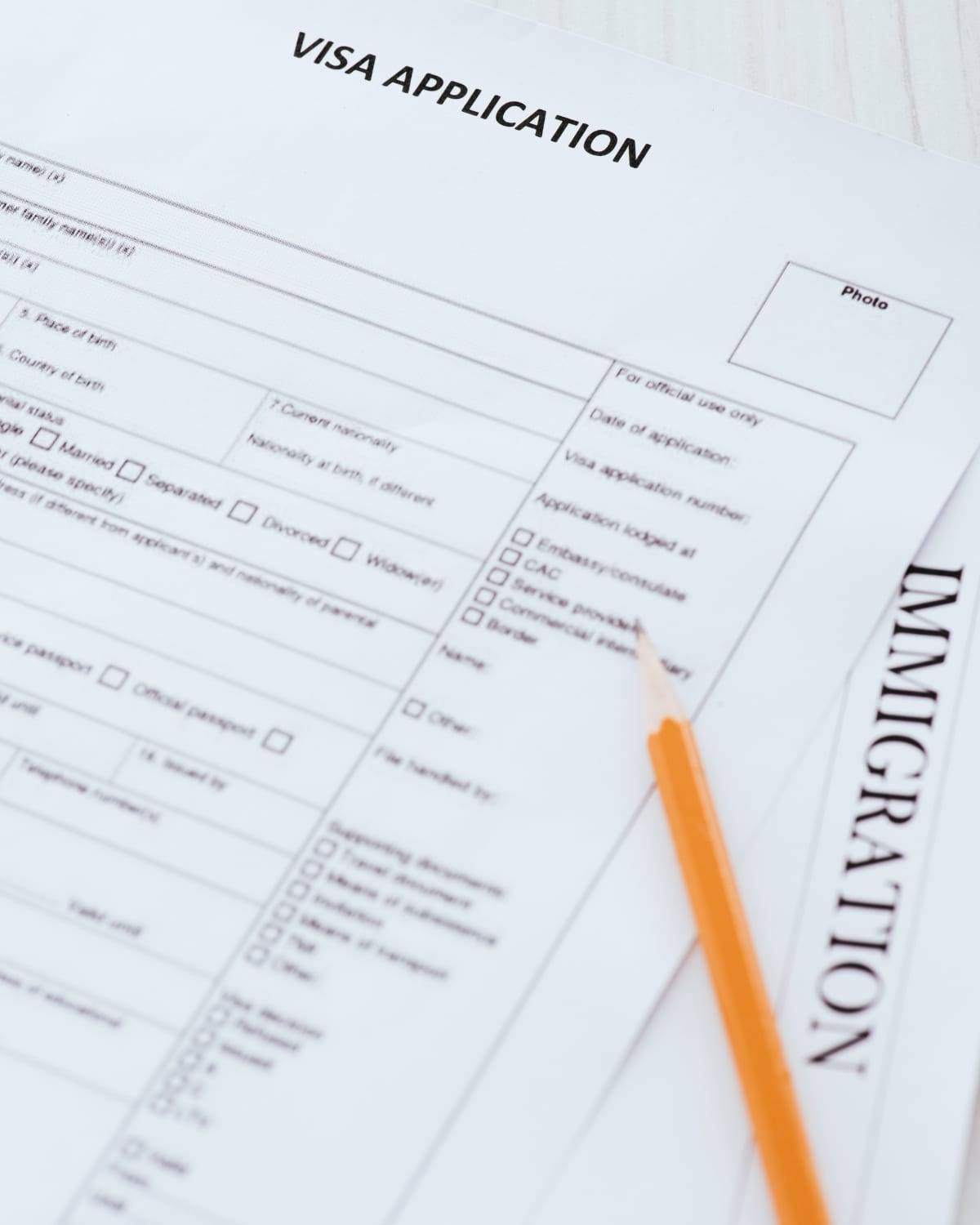
Money matters

Tax, in plain terms.

Serbia treats you as a tax resident if your permanent residence or center of vital interests is in Serbia, or if you are physically present for 183 or more days within a 12-month period, per PwC's Worldwide Tax Summaries for Serbia. This is a factual test, independent of your immigration status.

  • Holding a residence permit does not equal tax residence. The reverse is also true - the two are separate, independently determined questions.
  • Serbia's flat corporate income tax rate is 15%. If you register a DOO to support a self-employment residence application, this rate applies to company profits; personal income tax and social security contributions apply separately when you draw salary or dividends.

Not tax advice. Confirm your specific tax position with a qualified advisor; cross-border tax treatment between Russia and Serbia involves additional considerations this page does not resolve.

Paperwork, done once

Document apostille from Russia.

  1. 1

    Confirm Russia's Hague membership status

    Russia has been a contracting state to the Hague Apostille Convention since 31 May 1992, and remains a member as of 2026. Apostilled Russian documents are, in principle, recognized in Serbia without additional consular legalization.

  2. 2

    Request through Gosuslugi or an MFC

    Apostille certification can be requested through the Gosuslugi portal or through multifunctional public service centers (MFCs), per Schmidt & Schmidt's summary of Russian apostille procedure.

  3. 3

    Build in extra time

    Since 2022, processing at the issuing end inside Russia has, in some cases, become less predictable. Confirm current apostille processing times with the issuing authority before assuming a fixed turnaround.

  4. 4

    Translate after apostille

    Certified Serbian translation is arranged once the apostille is complete.

From clients who moved

What our clients say

I kept my clients and my income; they just made the residence and banking side work around it.
Ivan Smirnov Small-business owner
Booking the call was the moment it stopped feeling overwhelming. They laid out the whole path before I committed to anything.
Anna Kuznetsov Remote marketer
Opening a bank account as a foreigner is where people get stuck. They introduced me to one that was used to it, and it went smoothly.
Dmitri Popov Freelance writer
Serbia's flat-tax position

Tax comparison: Serbia vs Russia.

Serbia levies a flat 15% corporate income tax. The comparison is the standard headline corporate rate, sourced to PwC Worldwide Tax Summaries (accessed July 2026); your effective rate depends on structure and income, and living costs vary by country - we cover your specifics on the call.

Illustrative monthly cost of living, Serbia compared with Russia
Expense Serbia Russia Difference
Corporate income tax (standard) 15% (flat) 25% Serbia lower
Russian questions

Common questions.

Yes. Russia remains a Hague Apostille Convention member as of 2026, and apostilled Russian documents are recognized in Serbia. Processing times at the issuing end can vary, so confirm current turnaround with the issuing authority before finalizing your timeline.

Russian citizens can enter Serbia visa-free for short stays. A residence permit is required to remain longer, through one of the standard non-EU residence routes.

This varies by bank and has changed since 2022. Confirm current acceptance directly with Serbian banks rather than relying on older information; this is a genuine practical friction point for this segment specifically.

No. Russian applicants use the same general non-EU residence framework - employment, self-employment, real estate, or family reunification - available to any non-EU citizen.

No, and we won't tell you otherwise. Documented cases show that formal residence status does not eliminate all uncertainty. We focus on preparing the strongest, most complete file possible rather than promising outcomes we don't control.

Typically yes, through family reunification once your own status is established, though exact sequencing depends on your specific route.

No, though documents require certified translation, and Serbian and Russian share enough linguistic similarity that many find day-to-day communication easier than expected, even without fluency.

Planning your move from Russia?

A free 30-minute call. We'll confirm your route, the documents to prepare, and a realistic timeline - before you commit to anything.

Book a consultation
Chat with us