Relocate to Serbia
Moving from Moldova Moldovan RS

Moving to Serbia from Moldova, the practical route explained

Residence options for Moldovan citizens, regional context, and an honest look at the tax and cost questions that actually apply.

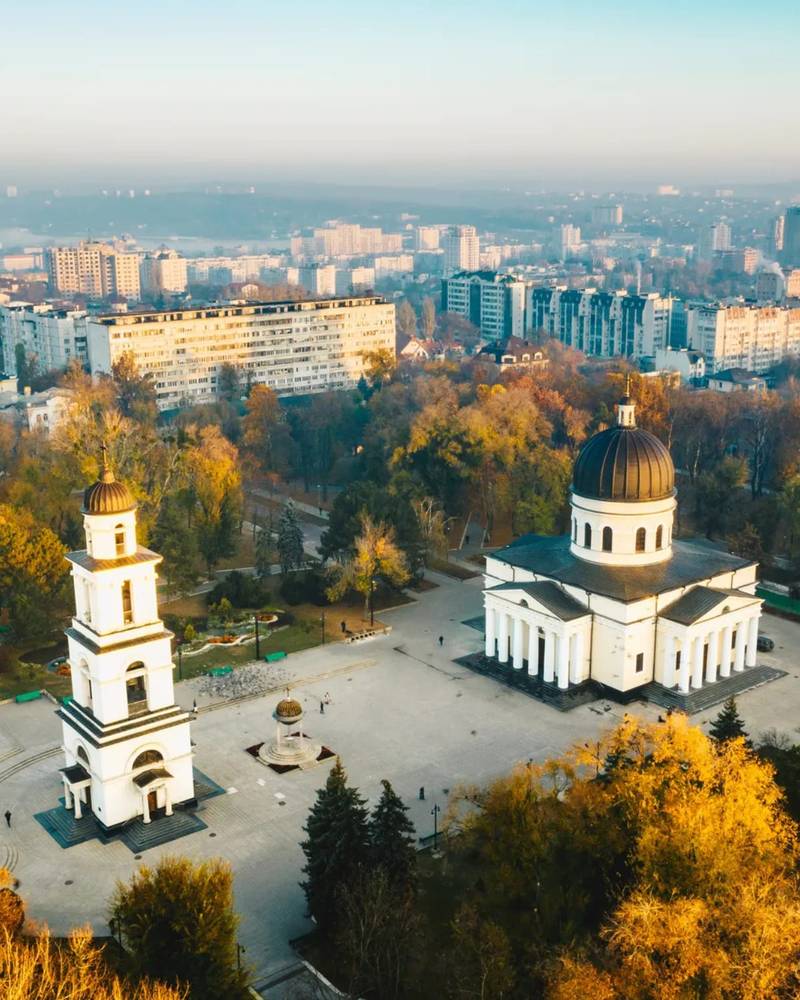
The Nativity Cathedral in central Chisinau, Moldova
The basics

Visa requirements for Moldovan passports.

Visa and residence requirements for Moldovan passport holders
Type Duration Requirement Note
Tourist entry Short stays Visa-free No entry visa needed; a residence permit is needed to stay longer
Extended stay 90+ days Residence permit Apply before your visa-free stay expires
Work authorisation 1 year Work + residence Employer or self-sponsorship
Permanent residence Indefinite After a qualifying period Continuous legal residence
Why Moldovan citizens move here

A soft landing in Central Europe.

A larger job and business base

Belgrade offers a larger labour market and business ecosystem than most of Moldova, a draw for work and entrepreneurship.

A connected European base outside the EU

Belgrade puts Moldovans on a well-connected European mainland with strong onward links, on a non-EU footing that suits some business structures.

Comparable living costs

Living costs across Moldova and Serbia are broadly comparable, and Serbia's larger economy brings a wider range of work and housing.

English-first business services

Moldovan (Romanian) and Serbian are different languages, but English is widely used across Belgrade's business services. Documents require certified Serbian translation.

How it works from Moldova

From application to residence card.

  1. 01

    Consultation

    We confirm your strongest route and the home-country documents it needs.

  2. 02

    Apostille at home

    You gather and apostille your key documents before you travel.

  3. 03

    Enter visa-free

    You arrive on the visa-free entry; we register your address.

  4. 04

    File in Belgrade

    We assemble the file, submit in person, and track it through the office.

  5. 05

    Card & banking

    You collect your residence card, and we open a bank account for you.

  6. 06

    Settle in

    Housing, healthcare, and a renewal reminder so nothing lapses after you're set up.

Come prepared

Moldova documents you'll typically need.

  • Moldovan criminal record certificate (cazier judiciar) - apostilled by the competent Moldovan authority
  • Proof of income, employment, or self-employment - depending on route
  • Proof of accommodation in Serbia - lease or property document
  • Valid Moldovan passport
  • Health insurance coverage valid for Serbia
  • Marriage or birth certificates, apostilled, if applying with family

Exact documents depend on your route - we send a tailored checklist after your consultation.

Serbia is not a tax saving for Moldovans

Moldova's 12% corporate tax is below Serbia's 15%. If tax is your main motivation, Serbia is unlikely to help - move for work, business, or regional reasons instead.

Plan for apostille and translation

Moldovan documents need apostille and certified Serbian translation. Because the languages differ, budget for translation on every civil document.

Moldovan citizens relocating to Serbia most often move for work, business, or a larger regional base - not for tax, since Moldova’s corporate rate is already lower than Serbia’s. This guide covers routes, documents, timeline, and the questions Moldovan applicants ask.

Book a free 30-min eligibility call to review which route fits your situation as a Moldovan citizen.

Why Moldovan citizens choose Serbia

Moldova is tracked here as a template-quality country page mapped to the work and founder profiles, since no validated Moldova-specific persona evidence currently exists - we say so plainly rather than inventing a demand narrative. The honest drivers are a larger job and business market in Belgrade, a well-connected non-EU European base, and comparable living costs. Tax is not a factor: Moldova’s rate is lower.

Best residence route for Moldovan citizens

Since Serbia is not an EU member, Moldovan applicants use the standard non-EU residence framework. Those moving for work use the employment-based route, which combines residence and work-permit approval; remote workers and founders use self-employment; and family members join through family reunification once a primary applicant holds residence.

Timeline for Moldovan applicants

Processing time is typical, not guaranteed, and depends on the municipality, the route, and document completeness. Moldovan-issued documents move through the apostille process predictably in principle, since Moldova is a Hague Apostille Convention member.

Check your route in 60 seconds

Cost breakdown

Costs vary by route, family size, and lifestyle. Line items that consistently matter for Moldovan applicants:

  • Apostille and translation costs for Moldovan-issued documents - budget for translation on every civil document
  • Health insurance valid in Serbia
  • Residence permit application and service fees
  • Company formation costs, if using the self-employment/DOO route - see our company formation guide
  • Housing costs, broadly comparable to Moldova, with more range in Serbia’s larger cities

Common mistakes Moldovan applicants make

  • Moving for tax reasons. Moldova’s rate is lower - build the decision on work, business, or regional grounds.
  • Assuming visa-free entry equals residence. Short visa-free stays do not permit long-term living or working - you need a residence permit.
  • Underbudgeting translation. With different languages, every civil document typically needs certified Serbian translation.
  • Starting the apostille process too late. Processing volume varies and is a common, avoidable source of delay.
  • Applying on the wrong route. Match the permit to your actual reason for moving before applying.

Book a free 30-min eligibility call - get a route recommendation specific to your situation as a Moldovan citizen.

Sources: Serbian Ministry of Interior - Foreigners (accessed July 2026); PwC Worldwide Tax Summaries - Serbia (accessed July 2026); Tax Foundation - Corporate Income Tax Rates in Europe 2026 (accessed July 2026); HCCH - Hague Apostille Convention Status Table (accessed July 2026).

Money matters

Tax, in plain terms.

Serbia treats you as a tax resident if your permanent home or center of vital interests is in Serbia, or if you're physically present for 183 or more days within a 12-month period, per PwC's Worldwide Tax Summaries for Serbia. For Moldovans, tax rarely drives the move - Moldova's rate is lower.

  • Moldova's corporate rate is lower, not higher. Moldova applies a 12% corporate income tax, below Serbia's flat 15%, per PwC's Worldwide Tax Summaries. We will not pitch a tax saving that does not exist.
  • Personal and cross-border position still matters. Where you are personally resident and how cross-border income is treated are separate questions worth checking with a qualified advisor.

Not tax advice. This is general orientation, not individualized tax advice - confirm your specific position with a qualified cross-border tax advisor.

Paperwork, done once

Document apostille from Moldova.

  1. 1

    Identify the correct Moldovan authority

    Apostille competence in Moldova depends on the document type and issuing body. Confirm which applies to each document before you start.

  2. 2

    Confirm current turnaround

    Processing times vary by document volume - confirm the current turnaround before setting a submission date.

  3. 3

    Translate after apostille

    Certified Serbian translation is typically required regardless of the apostille itself.

  4. 4

    Keep originals and copies together

    Serbian authorities typically want to see both the apostilled original and a certified translation at submission.

From clients who moved

What our clients say

I kept my clients and my income; they just made the residence and banking side work around it.
Andrei Rusu Small-business owner
Booking the call was the moment it stopped feeling overwhelming. They laid out the whole path before I committed to anything.
Elena Ciobanu Remote marketer
Opening a bank account as a foreigner is where people get stuck. They introduced me to one that was used to it, and it went smoothly.
Ion Popa Freelance writer
Serbia's flat-tax position

Tax comparison: Serbia vs Moldova.

Serbia levies a flat 15% corporate income tax. The comparison is the standard headline corporate rate, sourced to PwC Worldwide Tax Summaries (accessed July 2026); your effective rate depends on structure and income, and living costs vary by country - we cover your specifics on the call.

Illustrative monthly cost of living, Serbia compared with Moldova
Expense Serbia Moldova Difference
Corporate income tax (standard) 15% (flat) 12% Serbia higher
Moldovan questions

Common questions.

Moldovan citizens can enter Serbia visa-free for short stays. A residence permit is required to remain longer, through one of the standard routes.

No. Moldova's 12% corporate rate is below Serbia's 15%. Serbia is not a tax play - the reasons to move are work, business, and regional.

Generally yes, under Serbia's reciprocity framework governing foreign property ownership. See our real estate guide for the full mechanics.

No, though the languages differ, so budget for certified translation on documents. English is widely used in Belgrade's business services.

The employment-based route, which uses Serbia's unified residence-and-work permit when a Serbian employer sponsors your position.

No. Short visa-free stays do not permit long-term living or working - you need a residence permit for that.

Planning your move from Moldova?

A free 30-minute call. We'll confirm your route, the documents to prepare, and a realistic timeline - before you commit to anything.

Book a consultation
Chat with us