Article
One of the better-ranked Belgrade nomad guides online tells readers the city has no big international chains, so you have to ask around to find an internet cafe. A commenter under that same article pushed back directly: everyone they knew in Belgrade had internet at home, and working from anywhere was trivially easy.
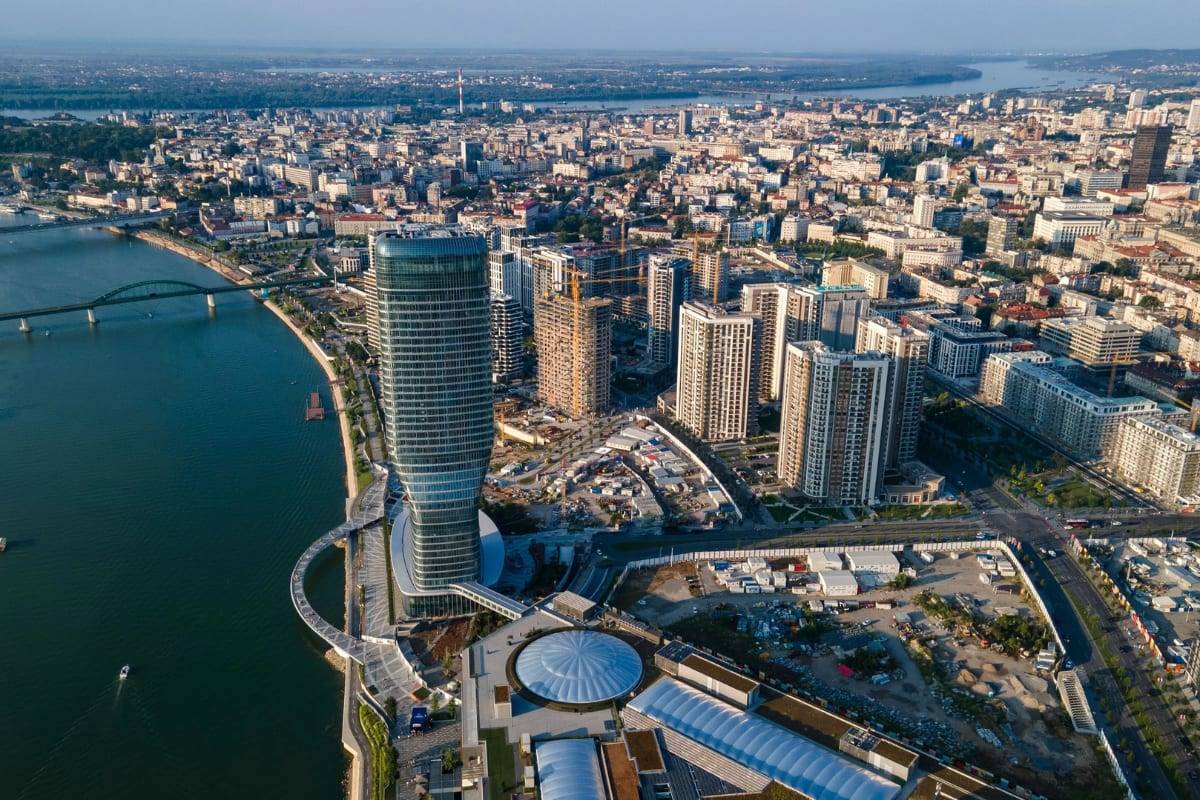
The commenter is right, and the guide is describing a city that has moved on. That contradiction is a useful place to start, because outdated infrastructure advice is the most common reason people arrive with the wrong mental model. This post is about what it is actually like to work from Belgrade now: connectivity, the workspace landscape, the rhythm of the working day, and the honest limits.
If you want to know where to live, our Belgrade neighbourhoods ranked post covers that properly. If you want to know what it costs, read cost of living in Belgrade. This one stays on the working question.
Connectivity: the least interesting problem you will have
Fibre internet is widely available across the city and inexpensive relative to Western Europe, with decent speeds standard in most centrally located buildings. For the overwhelming majority of remote work, including full days of video calls, this is a non-issue.
Three practical caveats are worth more than any headline speed number:
- Check the specific flat, not the city. Belgrade’s building stock ranges from new construction to pre-war apartments, and what is installed varies accordingly. Ask the landlord which provider serves the building before you sign anything. One question during the viewing saves a month of frustration.
- Get a local SIM or eSIM in your first days. Mobile data is the redundancy layer that makes everything else comfortable, turning a router failure from a lost workday into a twenty-minute annoyance. This is the most repeated piece of practical advice from nomads who have actually been here.
- Test before committing to a long lease. If your income depends on a stable connection, run a real call from the flat while you are standing in it.
The “hunt for an internet cafe” framing is a relic. Apartments are wired, cafes have WiFi as standard, and coworking spaces exist in real numbers.
The coworking landscape, described honestly
We deliberately do not publish a named list of coworking spaces. Such lists go stale quickly, and a recommendation for a space that has closed, moved, or changed its pricing is worse than no recommendation at all. What holds up is the shape of the market, so here is that.
What exists. Belgrade has coworking in genuine variety: small independent spaces with a fixed community and an events calendar, startup-adjacent spaces attached to accelerators and tech companies, and larger serviced-office operations aimed at teams and satellite offices, plus hybrid venues sitting between a coffee shop and a membership.
Where it clusters. There are two centres of gravity. The central districts, Dorcol and Vracar in particular, hold the highest concentration of independent spaces and coworking-friendly cafes, and skew younger and more international. New Belgrade, close to the business parks, skews toward larger and more formal spaces with better parking and more meeting rooms. Which side suits you depends on whether you are buying a community or a desk.
Day pass versus monthly desk. A day pass typically buys a hot desk, WiFi, coffee, and access during standard opening hours. A monthly membership usually adds longer access, a reliable spot, meeting-room time, and, more importantly, the community layer: the other members, the events, and the group chat where newcomer questions actually get answered. If community is the reason you are paying, a day pass will not deliver it. Prices vary widely by space and tier, so treat any figure you read online as a prompt for a direct enquiry rather than a fact.
What to check before committing to a month. Ask about the phone-call and meeting-room policy, because open-plan spaces differ enormously on whether taking calls at your desk is acceptable. Ask about real access hours if you work outside the local day, and about backup power. Then go in for a day first. The difference between a space that feels like a library and one that feels like a co-op is not visible on a website.
Cafe working, and the norms nobody explains
Belgrade cafe culture assumes lingering. Sitting for two hours over one coffee is normal rather than grudgingly tolerated, and that is what makes cafe-working viable here in a way it is not in some cities.
There is still a difference between a cafe you can sit in and one you can genuinely work in. Sockets are the usual constraint, followed by noise, which climbs sharply through the late afternoon. Smoking rules vary by venue and matter more than newcomers expect. Mornings and early afternoons are the reliable working window in most places.
The realistic pattern is a mix: focused work at home or at a coworking desk, calls somewhere you control the noise, and cafes for the middle-difficulty work that benefits from being out of the flat. Treating cafes as the entire office plan is where people run into trouble.
The working day: time zones and overlap
Belgrade runs on Central European Time, which is quietly one of the strongest practical arguments for the city.
EU clients give you a full, unbroken overlap. If your work is European, your calendar behaves exactly as it did at home.
US East Coast work gives an afternoon-into-evening overlap. A morning of focused work followed by calls from mid-afternoon is a sustainable rhythm plenty of people here run permanently.
US West Coast work means late evenings. It is doable, and people do it, but it inverts your social life in a city that already eats and socialises late. Think carefully before assuming you will adapt.
Asia-Pacific clients are the awkward case, with early mornings the only realistic window.
Power, backup, and resilience
Serbia has a functioning grid and outages are not a daily fact of life. They do happen, more often in older building stock and during heavy weather, and winter is when you notice them.
A reasonable setup is unglamorous: a charged laptop, a power bank sized for your phone and hotspot, a local data plan with enough allowance to carry a call, and a known fallback location within walking distance. If your work genuinely cannot tolerate an hour offline, ask coworking spaces directly about backup power.
The community question, answered honestly
Belgrade has a real international community. A steady calendar of meetups, language exchanges, and tech events runs through the year, and the expat and nomad presence is concentrated and visible in specific neighbourhoods rather than spread thin across the city.
It is also smaller than Lisbon, Bali, or Chiang Mai, and pretending otherwise would do you a disservice. Belgrade is a working city of just over a million people in the metro area, where nomads are a small subculture inside a large local population rather than a group the city has reorganised itself around. Nobody hands you a social life on arrival.
The practical consequence is that you find people through structures, not by accident. Coworking memberships, meetups and language exchanges, sports and hobby groups, and the online groups behind them are how connections actually happen here. A day pass and a passive attitude produce a lonely month. Two or three deliberate commitments in your first fortnight produce a different city entirely.
The upside of a smaller scene is that it is less transient. You meet people who live here, not people three weeks into a four-week stay.
Seasonality, and what winter changes
Nomad-listing data cited in our own audience research puts the average nomad stay in Serbia at roughly two and a half months, clustered between April and October. That seasonal shape is real, and it changes the city noticeably.
Summer Belgrade is an outdoor city: river terraces, cafe seating everywhere, long evenings, and the fullest version of the international scene. Winter moves indoors, days shorten, and the nomad population thins.
Three implications follow. Winter is when your flat matters most, because you will be in it far more, and heating costs rise meaningfully in the colder months, particularly in older buildings on district heating. Winter is also when a coworking membership earns its money, both for the space and for the people in it. And the community you meet in July is not the one here in January, so if you are testing whether Belgrade suits you long term, a shoulder-season or winter visit tells you considerably more than an August one.
Who Belgrade does not suit
- Anyone who needs consistent sun and warmth. Winters are grey and cold. This is a European capital, not a tropical base.
- Anyone whose work runs on US Pacific hours and who is not genuinely comfortable with a nocturnal schedule.
- Anyone wanting a large, ready-made nomad social scene to plug into on day one with no effort required.
- Anyone who needs a fully English-speaking bureaucratic environment. English is common in cafes, coworking, and among younger people. Official processes are another matter.
- Anyone unwilling to deal with paperwork who still wants to stay past the visa-free window.
If none of those describe you, Belgrade holds up well: a real city, a working environment that functions, costs that stretch a Western income, and a time zone that keeps European clients within easy reach.
The legal side, in one paragraph
Most visa-exempt nationalities can stay up to 90 days within any 180-day period, and there is an address registration step within 24 hours of arriving that catches people out. Our 90-day rule post covers both properly. Staying longer means a residence permit, and Serbia has no separately branded nomad visa. What functions as the equivalent is temporary residence on the ground of self-employment or entrepreneurship, explained in our digital nomad visa handbook. Separately, spending 183 days or more here can make you a Serbian tax resident regardless of your immigration status, which our tax residency post explains, and the paušalac flat-rate regime is where most freelancers end up. Read those rather than any summary here.
What to do next
If Belgrade is on your shortlist, the useful sequence is: the neighbourhoods post to narrow down where you would stay, the cost of living post to sanity-check the numbers against your income, then the visa material above if you might stay past 90 days.
If you would rather talk it through, our digital nomad visa service page explains the residence route and how to book a free 30-minute eligibility call. We will tell you if the self-employment route does not fit your income structure, which is more useful than a brochure.
Frequently asked questions
Is Belgrade good for digital nomads? For most remote workers, yes. Fibre is widely available, cafes are laptop-friendly, coworking exists in variety, and costs sit below Western European capitals.
Is the internet in Belgrade good enough for video calls? Generally yes in central areas, though check the specific building rather than assuming.
Do I need to find an internet cafe in Belgrade? No. That advice is out of date. Apartments are wired and a local data plan covers the gaps.
Where are Belgrade’s coworking spaces concentrated? The central districts, especially Dorcol and Vracar, and New Belgrade’s business areas.
Can you work from cafes in Belgrade? Yes, and it is normal. Sockets, noise, and smoking rules are the practical limits.
How big is Belgrade’s digital nomad community? Real but smaller than Lisbon or Bali. You find it through meetups and coworking rather than by accident.
How does Belgrade’s time zone work for remote work? Central European Time: full EU overlap, an afternoon overlap with the US East Coast, late evenings for the West Coast.
How long can I stay in Belgrade as a digital nomad? Usually 90 days within any 180-day period visa-free, then a residence permit. See our 90-day rule post.